
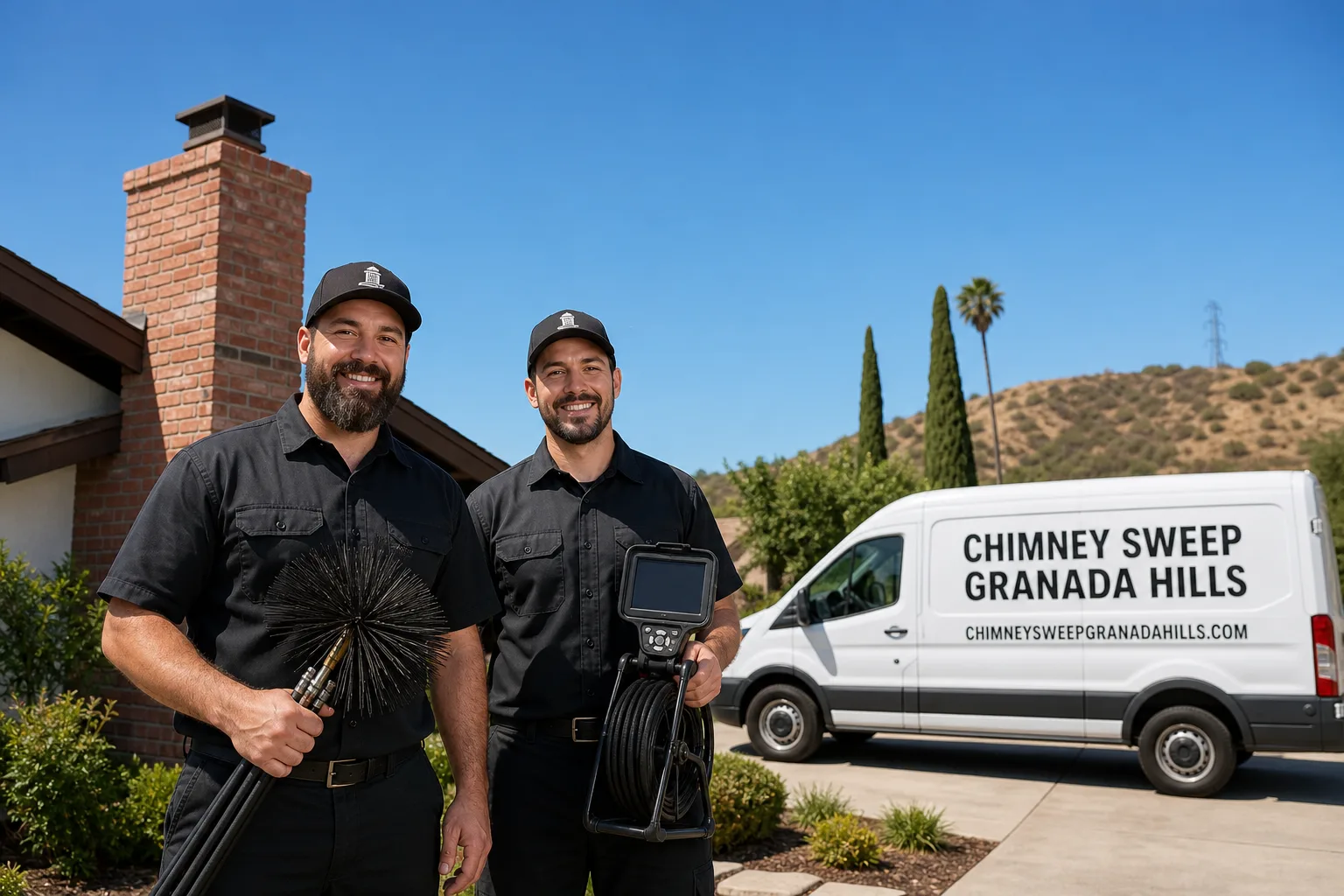
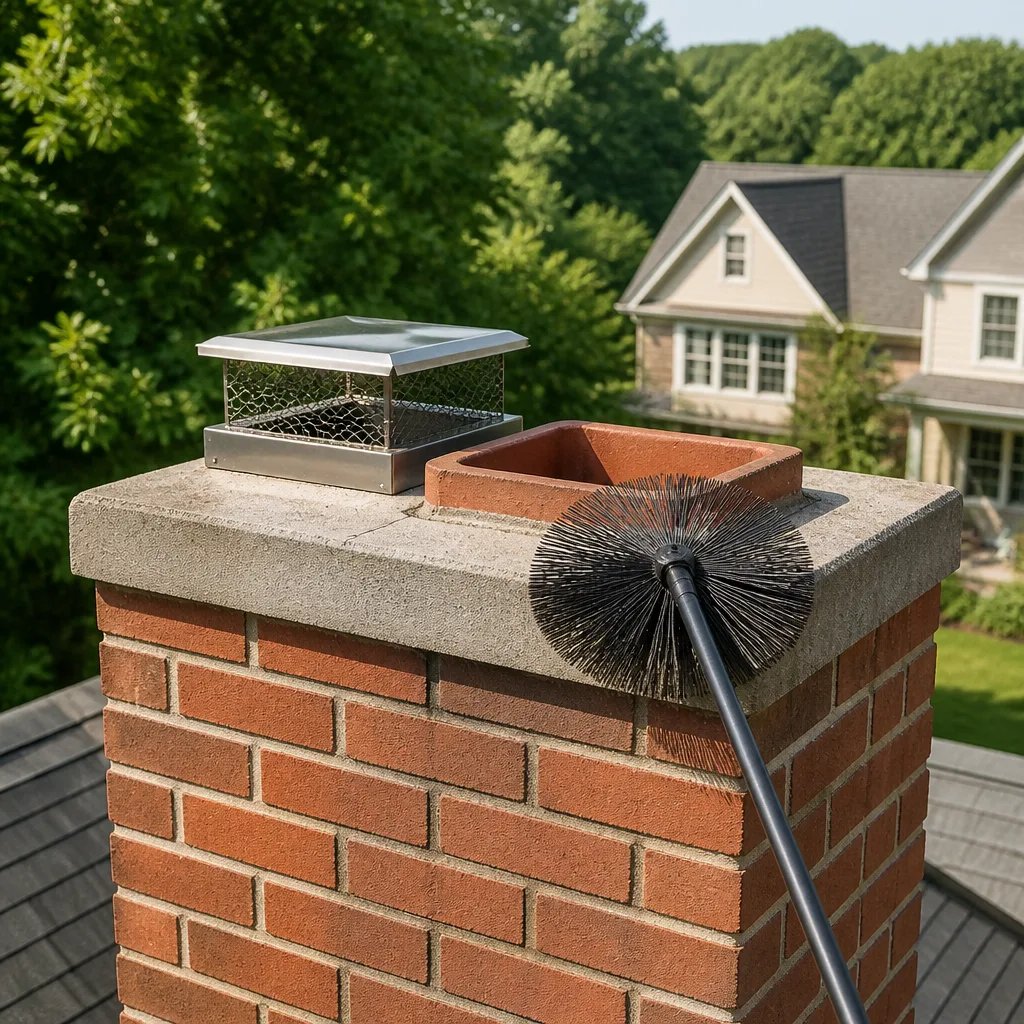
 Sweep & inspection
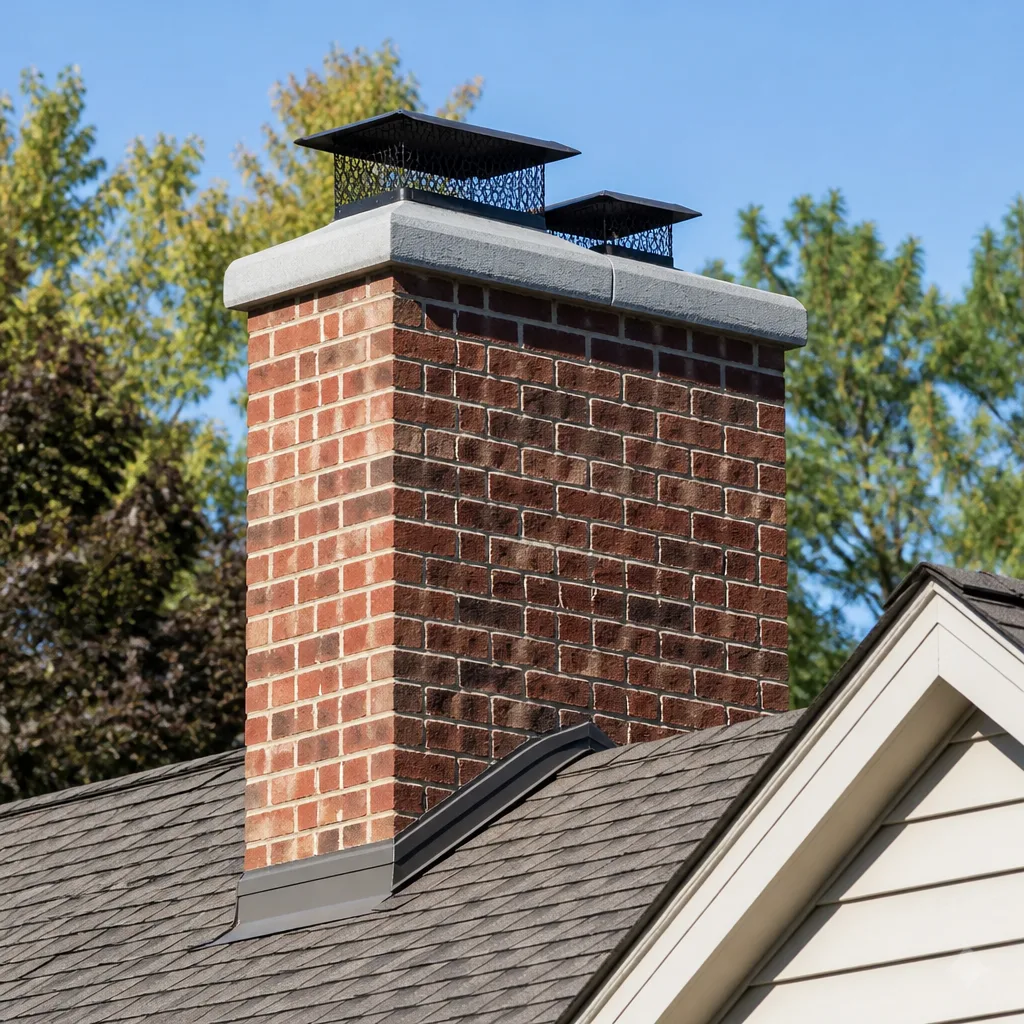 Caps & crowns
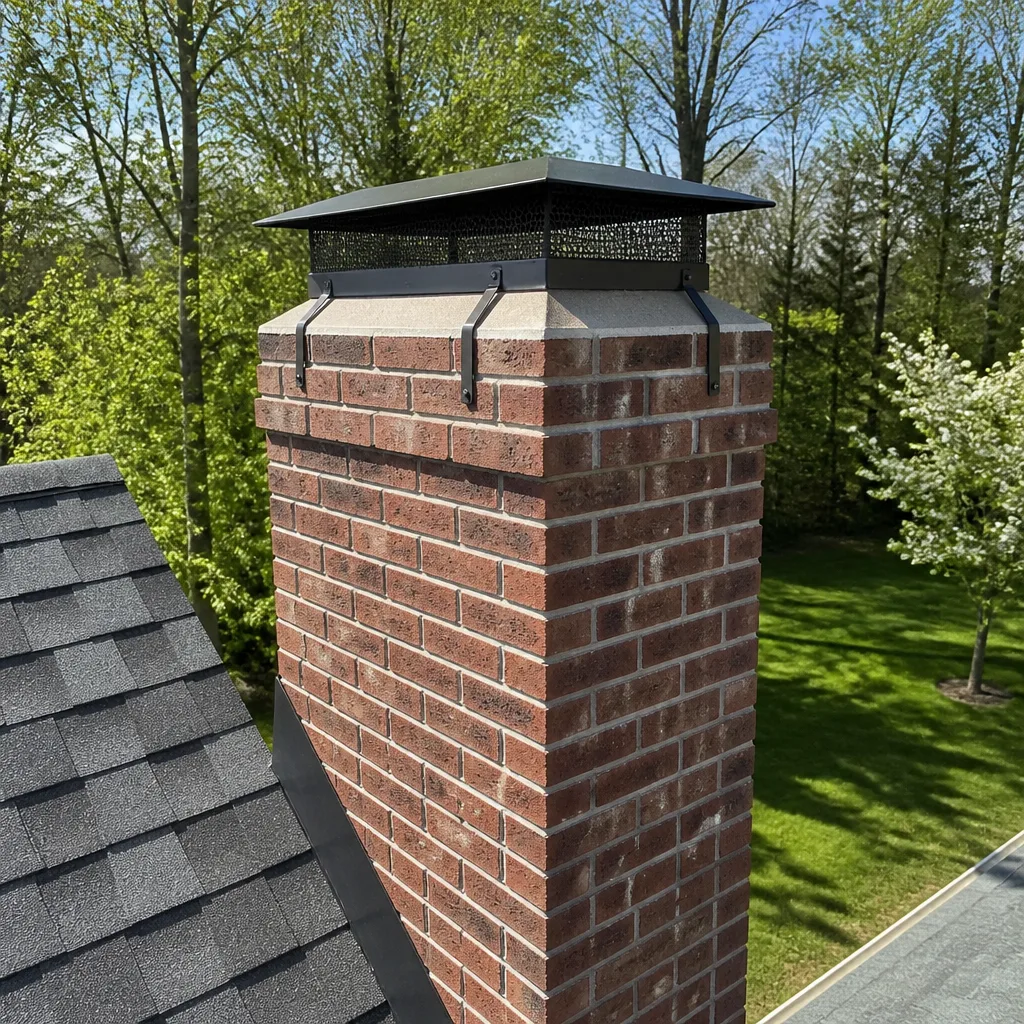 Flue relining
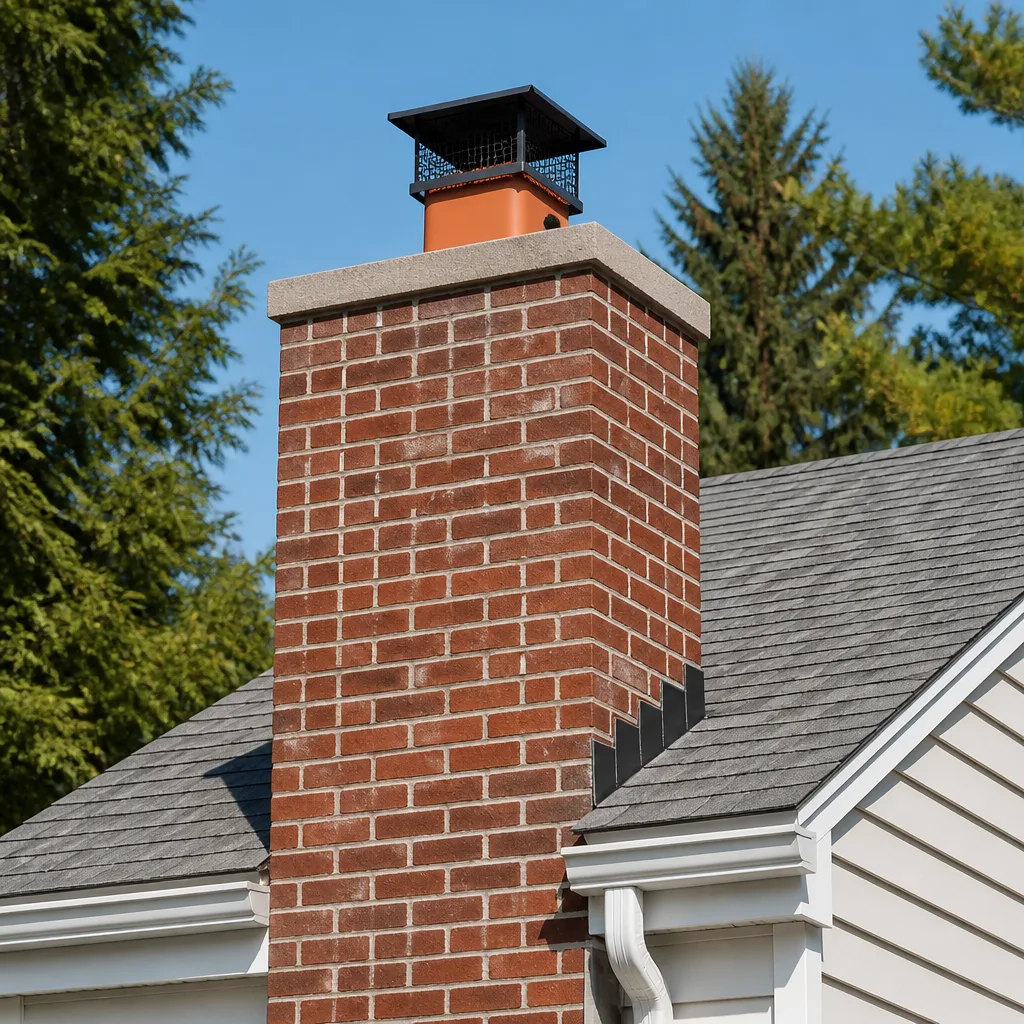 Masonry repair
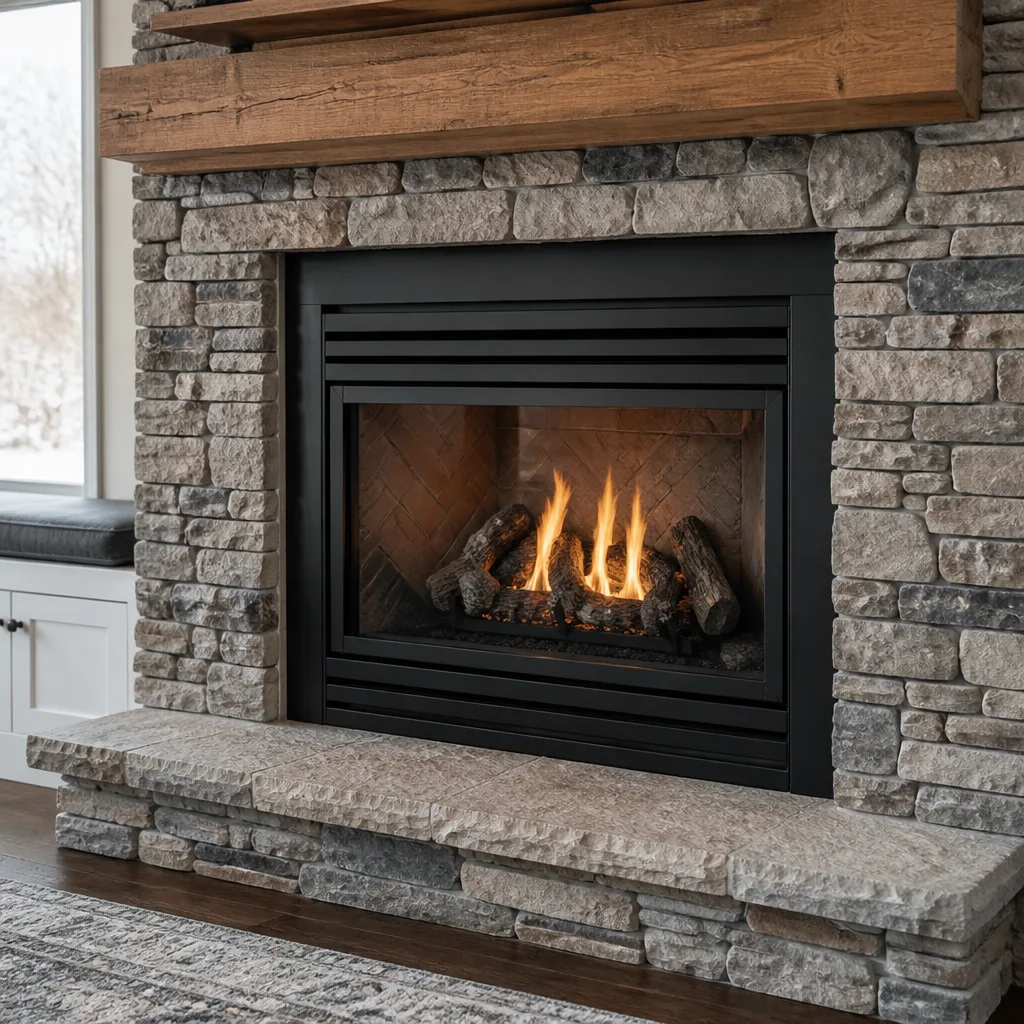 Gas fireplace service
Level 1 sweep and inspection to the NFPA 211 annual standard - flue, crown, cap, and flashing checked and photographed
Chimney sweep logs do not sweep chimneys. They loosen some creosote - which then falls where a brush and vacuum still have to collect it.
Fast, Reliable Chimney Inspection Across Sunland
If you live in Sunland and heat with a fireplace or a wood stove, a chimney inspection here is a safety check, not a formality. Fireplaces and stoves in the foothill neighborhoods along the Big Tujunga Wash see conditions flatland Valley cities don’t: wind-driven debris packed into uncapped flues, wildfire ash settling in from the Angeles National Forest, and original mid-century chimneys that were built before liners and spark-arresting caps were standard. We know this terrain and the housing stock that comes with it, and we can put a trained technician on a Sunland roof without a long wait. Call (855) 774-3956. We answer 24/7. Fast dispatch from 7am to 7pm, Sunday through Friday.
Why Sunland Homeowners Call Chimney Sweep Granada Hills for Chimney Inspection
Sunland sits at the base of the San Gabriels, and that changes how a chimney inspection has to be done. A visual look down the flue doesn’t tell you whether a palm frond nest is blocking the smoke chamber or whether winter rain has been seeping into a cracked mortar crown for two seasons. Our technicians have up to 10 years of experience, and every job is core to what we do. We’re a dedicated chimney specialist, not a multi-trade contractor adding a sweep as a side service.
That focus matters in a town where a lot of the housing went up between the 1940s and 1960s. Original masonry fireplaces in these ranch-style and modest mid-century homes often show unlined flues, spalling mortar, and crowns that have lost their seal. We inspect before we recommend, and we show you what we find rather than asking you to take our word for it. For Sunland homeowners, that’s the whole point. If nothing needs doing yet, we say so.
Styles & brands we work with
- Sweep & inspection
- Caps & crowns
- Flue relining
- Masonry repair
- Gas fireplace service
Our Chimney Inspection Services in Sunland
An inspection can stand on its own. You don’t have to book a cleaning package to get one. Buying or selling a house, assessing a chimney after a wind event, or just wanting to know where yours stands are all good reasons to call. Here’s how the levels work and how each one fits a Sunland home.
Level 2 Inspection
This is the inspection most Sunland homes need, especially original masonry fireplaces in mid-century houses and any wood stove used as a primary heat source. A Level 2 goes beyond a visual look: it covers the flue, the smoke chamber, the crown, and the cap, and it’s what we run when a property changes hands or after a chimney has seen a storm. If a flue was never lined, this is where it shows up.
Camera Inspection
Our camera inspection runs a scope down the flue so we can see the interior surfaces directly. In Sunland that matters because fine forest ash settles inside and looks a lot like creosote from the top, and a cracked crown can hide water damage that no visual check at the firebox will catch. You see the footage and the photo report along with us. Evidence first, then any recommendation.
Flue Inspection
The flue is where creosote and debris collect, and it’s where a wood stove in a foothill home loads up fastest. A flue inspection checks for first-degree creosote that’s starting to glaze, checks that the liner is intact, and confirms the flue isn’t blocked by the debris that blows in when a cap is missing. When buildup is heavy, we tell you plainly and explain why a shorter interval makes sense for your burning habits.
Level 3 Inspection
We recommend a Level 3 only when there’s a specific reason to open up part of the chimney, such as suspected damage behind a wall or a known event that a camera can’t fully rule out. These are the jobs we take the most care describing before anyone commits, because they involve access work. You’ll know why it’s being suggested and what the alternative is.
Trusted Brands We Service in Sunland
When an inspection turns up a problem, the fix uses professional-grade materials, not anonymous off-brand parts. We work with DuraFlex liner systems, HeatShield resurfacing, Gelco and Famco caps, Olympia Chimney components, and Copperfield specialty products. HeatShield capability means our technicians can resurface and restore a deteriorated flue liner rather than only sweeping around it, a skill beyond basic sweeping. We don’t claim parts stocked on a truck or a warehouse; the materials are ordered and installed to fit the job, and we keep scheduling tight so the gap between inspection and repair stays short. One specialist can carry it from the firebox to the crown, so you don’t have to line up a second contractor to finish what we started.
Common Chimney Inspection Problems We See in Sunland Homes
The failures in this town have a pattern, and it’s tied to the foothills and the age of the housing.
- Wildfire ash mistaken for creosote. After a fire season, fine ash from the Angeles National Forest settles into flues and looks like a dusty layer homeowners assume is ordinary buildup. That mistaken read leads people to skip sweeping while actual first-degree creosote keeps accumulating underneath and can glaze into harder second- or third-degree deposits.
- Debris nests in uncapped flues. Santa Ana winds drive leaves, twigs, and whole clusters of palm fronds and eucalyptus debris into any flue without a cap. Flatland Valley cities almost never see this. The nest sits unnoticed until a camera inspection shows the blockage or a cracked crown starts letting water in.
- Unlined flues in mid-century homes. Original masonry fireplaces from the 1940s through the 1960s often have no liner at all, and the interior mortar spalls over time. A Level 1 visual check won’t reliably catch it; that’s a Level 2 or camera job.
- Cracked mortar crowns. Hot dry summers followed by winter rain work on a crown year after year. A hairline crack admits water that freezes, widens, and travels down into the chimney structure, showing up later as draft trouble and hidden moisture damage.
See the difference
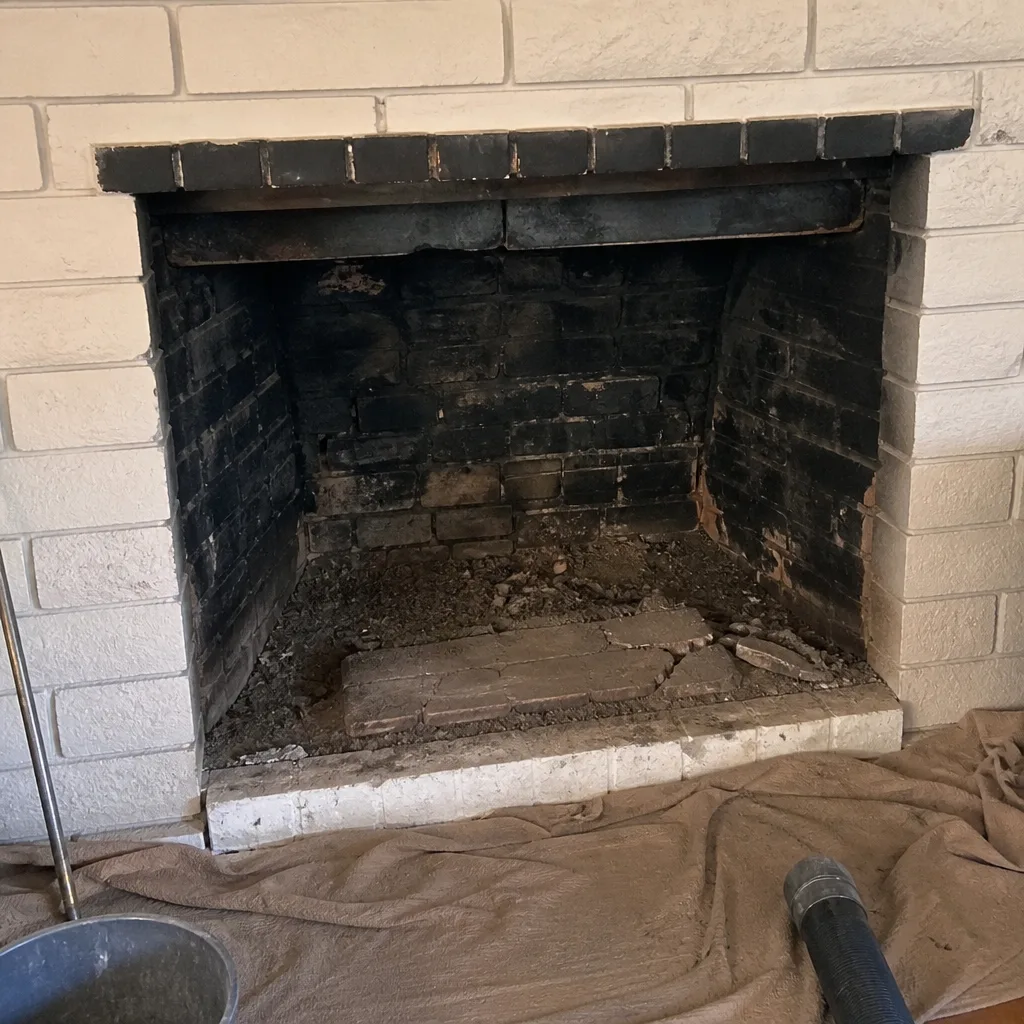 Before
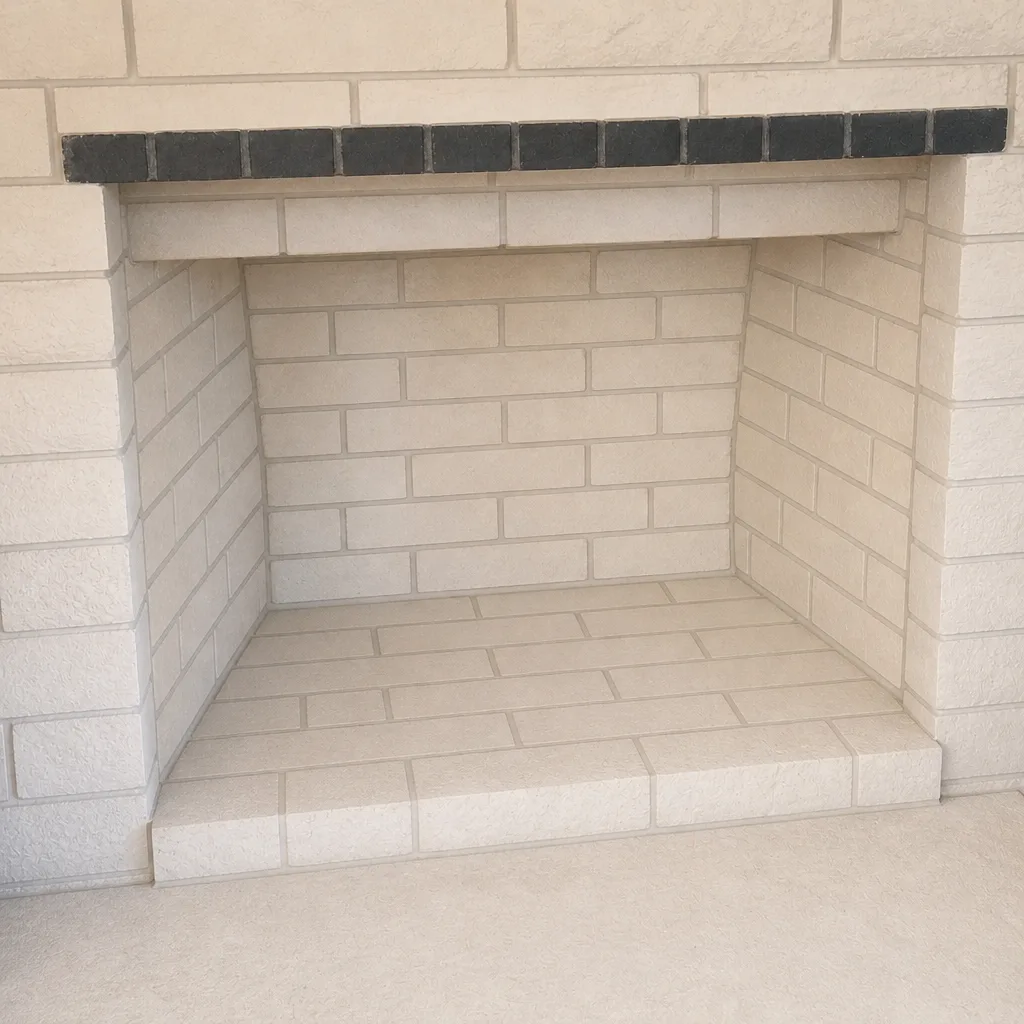 After
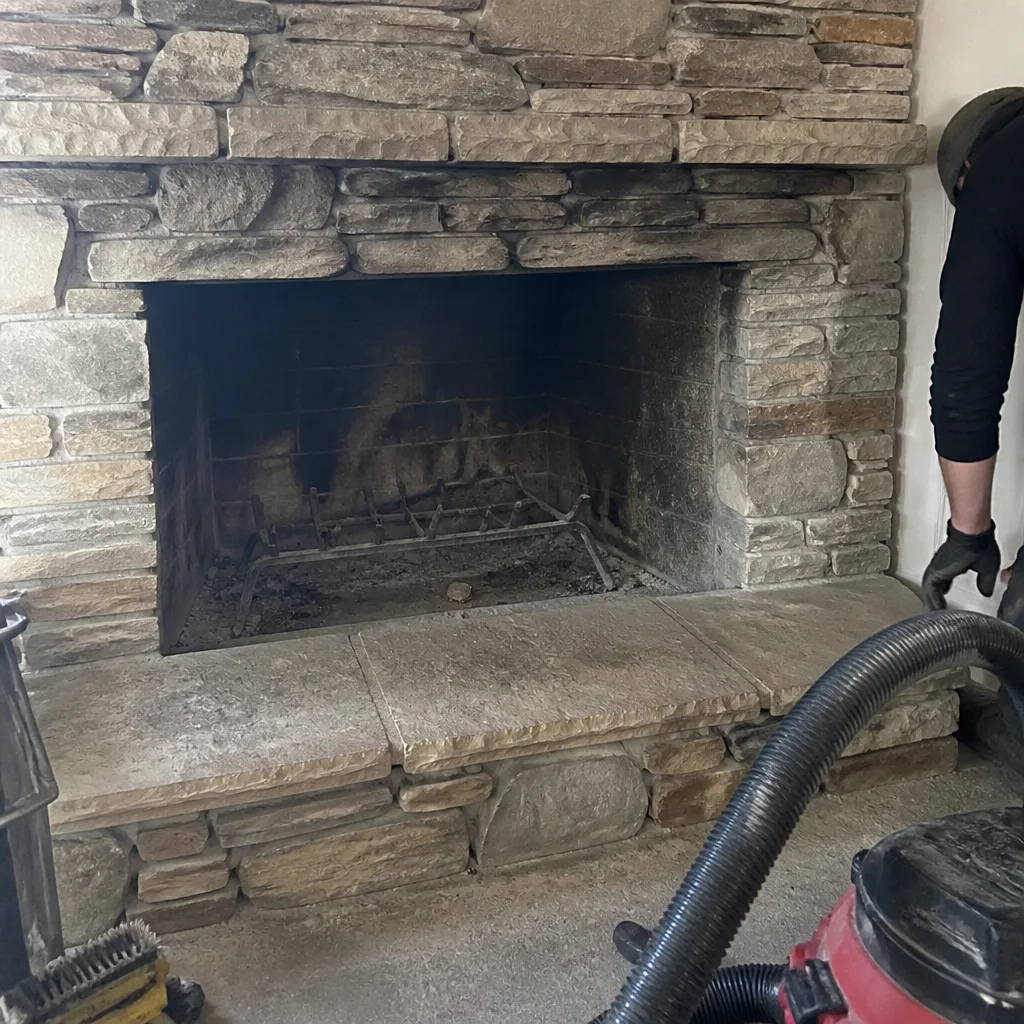 Before
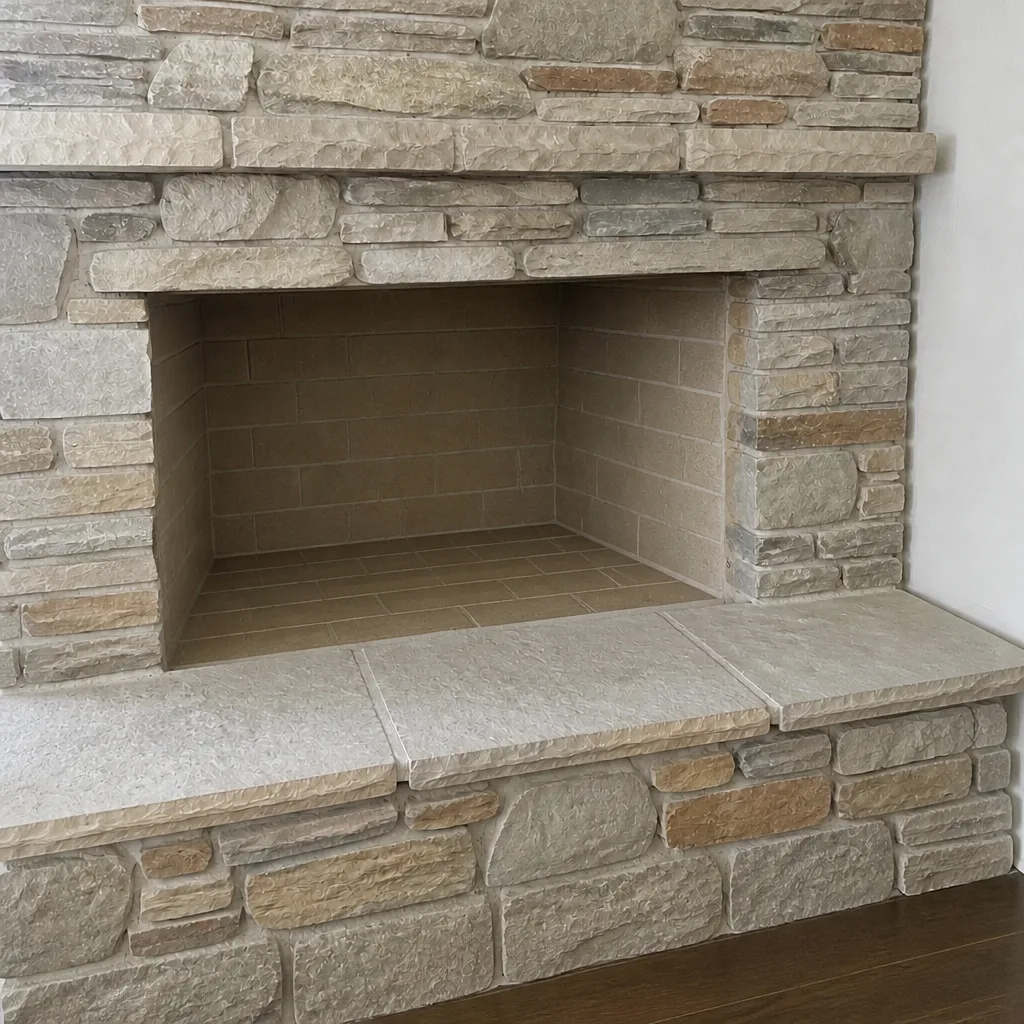 After
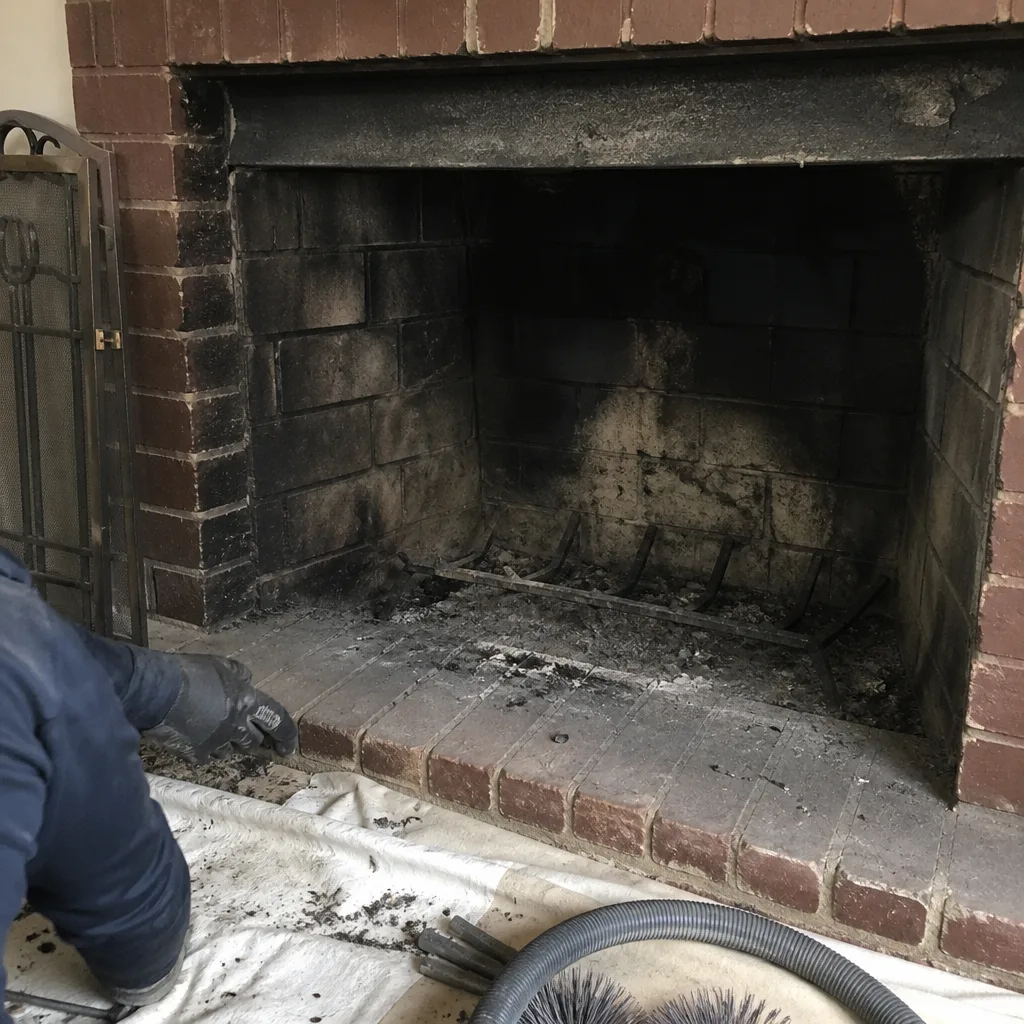 Before
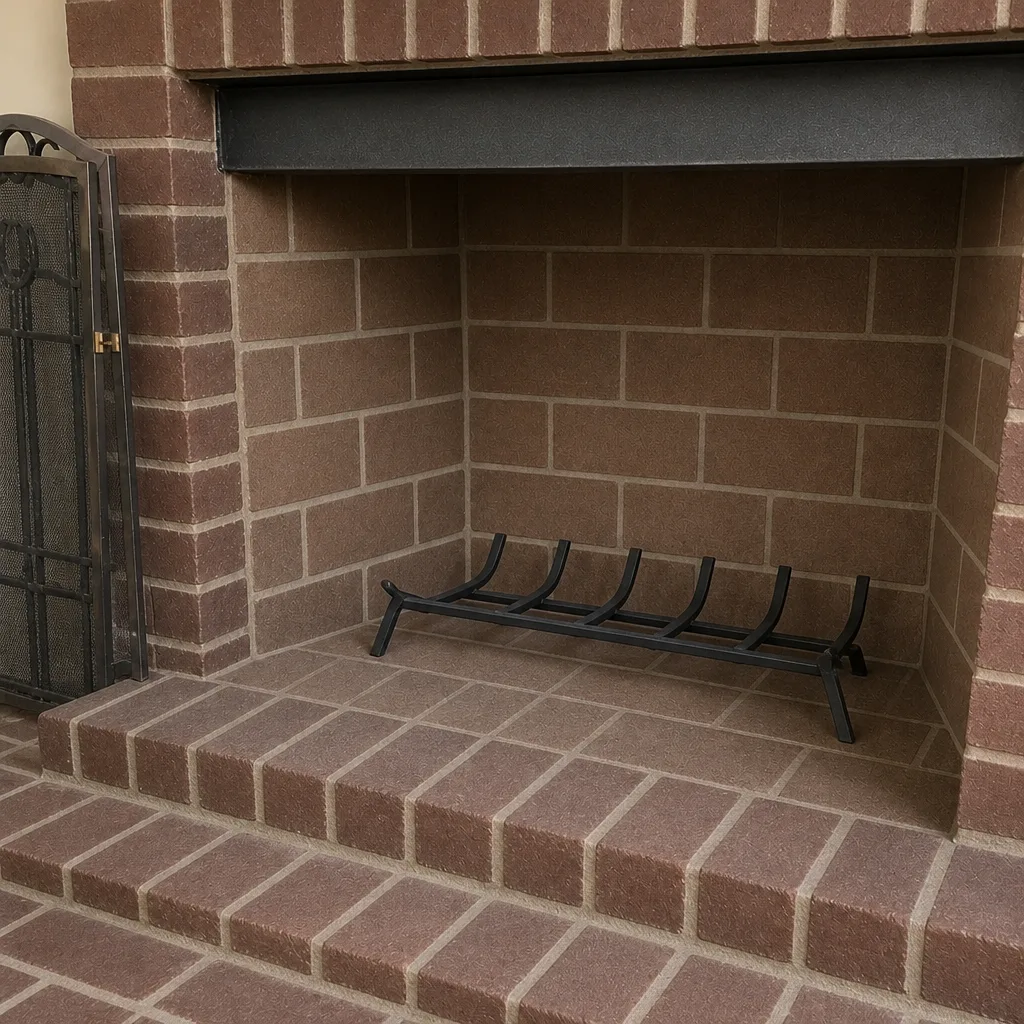 After
How Sunland’s Foothill Conditions Make Inspection a Safety Necessity
Here’s what makes a Sunland chimney different from one ten miles down in the flat Valley. After a Santa Ana wind event, technicians routinely pull entire nests of palm fronds and eucalyptus debris out of uncapped flues on this side of the mountains. Every wind season refills them if the cap is gone. Then during wildfire season, ash off the Angeles National Forest drifts down and settles in as a fine powdery residue that homeowners understandably read as creosote. It isn’t, and that’s exactly the trap: because the ash looks like buildup, people assume the flue is being handled, while real creosote collects beneath it and can glaze into a harder, more flammable deposit. That combination of wind-driven debris and wildfire ash is why an annual inspection and cap check here is a genuine safety matter rather than cosmetic upkeep, in a way the flatland cities rarely experience.
A typical job follows a familiar course. In an original 1940s-1960s ranch home, a fireplace might have an unlined flue and a cracked mortar crown. After a wind event the open flue has collected palm and eucalyptus debris, and a powdery ash layer has settled in on top of it. A qualified local pro runs a Level 2 camera inspection to check the liner and the smoke chamber, removes the debris nest, and then talks through a spark-arresting cap and crown repair. After that comes honest guidance on burning practice, since dry, well-seasoned wood and not leaving a smoldering fire overnight are what keep first-degree creosote from glazing in the first place.
Wood stoves used as the main heat get a shorter interval than a fireplace burned a few times a month. Heavy, steady burning builds creosote much faster, and in a foothill home relying on a stove through the cold months, a seasonal inspection is the realistic minimum. Treated that way, a stove stays safe and drafts right; ignored, it’s the setup for problems that cost far more than an inspection.
Pricing for Chimney Inspection in Sunland, CA
A typical Level 1 inspection in Sunland runs $100 to $250. A Level 2 camera inspection generally comes in around $200 to $450, and a Level 3, which involves opening up part of the chimney, runs from $400 to $1,000 depending on access and how much of the structure has to be exposed. Cleaning is usually quoted separately and adds to those ranges if you want it done in the same visit. What moves the number is the level of inspection, the condition of the chimney, roof access, and whether repairs are needed. You get a written estimate that sets the final price before anything is booked, and the estimate itself is free. When an inspection turns up a cracked crown or a debris nest, we show the photo report that supports it, and we tell you plainly when work can safely wait.
We Also Serve Cities Near Sunland
Sunland keeps us busy, and we also handle chimney inspection in the neighboring towns. If you’re in San Fernando, Sylmar, Panorama City, or Van Nuys, the same specialist can take care of your chimney. Our chimney inspection team covers the whole area around Sunland, so you don’t have to hunt for a separate contractor outside your own town. Call with your address and we’ll book a visit that fits your schedule.
Serving Sunland, CA – Our Local Coverage Area
We serve Sunland and nearby communities. Use the map below to see the area we cover. If you’re nearby, we can almost certainly help.
FAQs – Chimney Inspection in Sunland
Once a year is the realistic baseline if a wood stove is your main heat source in Sunland, and more often if you burn heavily through the winter. The foothill conditions here load a flue faster than flatland burning: wind debris and forest ash both collect, and steady wood-stove use builds creosote quickly. If you’ve had a heavy burn season or a big wind event, don’t wait for the calendar. Call (855) 774-3956 for an exact quote. Estimates are free.
A Level 2 inspection is standard for a real estate transaction in Sunland. It covers the flue, smoke chamber, crown, and cap, and it’s the level that reliably catches the problems common to mid-century foothill homes, like an unlined flue or a cracked crown. Because an inspection is a standalone service with us, a buyer or seller can get the assessment done without committing to a cleaning package. Call (855) 774-3956 to schedule one.
Santa Ana wind events drive leaf and twig material straight into any uncapped flue on this side of the mountains. Palm fronds and eucalyptus debris are the usual culprits, and they can pack in as a full nest that blocks the flue without a homeowner noticing. Flatland Valley cities almost never see this kind of loading. A physical cap-and-flue debris check is part of every inspection we do here for exactly that reason. Call (855) 774-3956 for an exact quote.
Yes, and it happens often. Fine ash from the Angeles National Forest settles into Sunland flues as a light powdery layer that reads a lot like ordinary creosote. The risk is that homeowners assume the buildup is being handled and skip a sweep, while real creosote accumulates beneath the ash and can glaze into a harder deposit. A camera inspection shows what’s actually in the flue, and we let the footage lead the recommendation. Call (855) 774-3956 to book one.
Get it inspected and repaired before the next rainy season, not after. A cracked mortar crown lets water into the chimney structure, and hot summers followed by winter rain widen the crack and let moisture travel down into the masonry. We inspect first and show you the photo evidence, then recommend crown repair that addresses the cause rather than a patch. In a foothill home with an original chimney, this is the single most useful preventive step. Call (855) 774-3956 for a free estimate.
Ready to know where your chimney stands? Call (855) 774-3956. We answer 24/7. Fast dispatch from 7am to 7pm, Sunday through Friday. Every inspection includes a camera inspection and photo report so you can see exactly what we see, and we’ll tell you plainly when work can safely wait. Estimates are free.
Written by the team at Chimney Sweep Granada Hills.